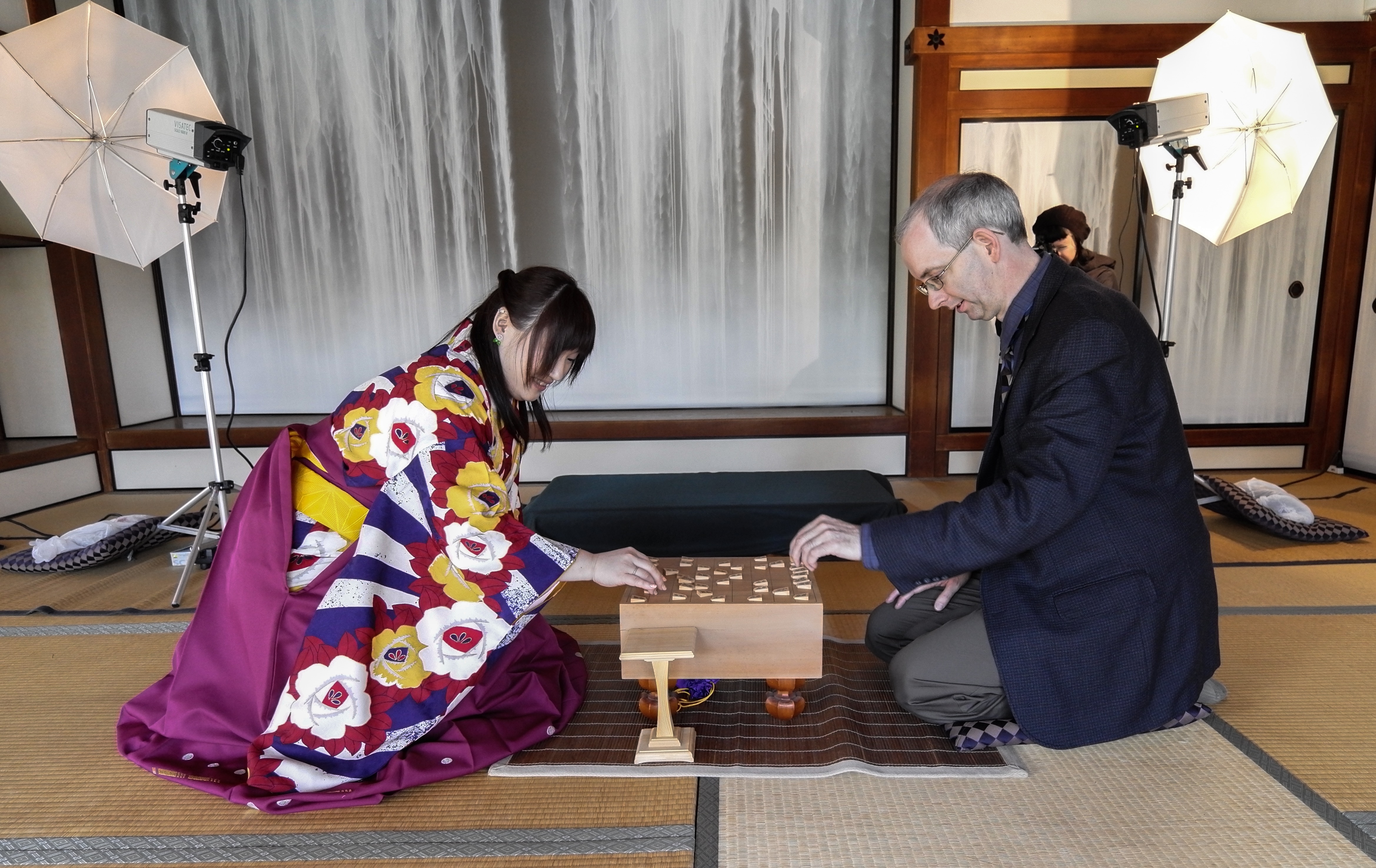
 My reason for visiting Japan in 2019 on a JSPS long-term Fellowship was to collaborate with colleagues on my philosophical research concerning the role of mathematics in science. (See “Philosophy of Mathematics in Nature: Cicadas and Bamboos.”) However, it so happens that I am also an enthusiastic player of shogi, the traditional Japanese version of chess. Spending seven months in Japan allowed me to deepen my experience of shogi in exciting new ways.
I grew up playing chess, and I first discovered shogi when I visited Japan for a conference back in 1996. After that, I started learning shogi, using the few books about the game that had been translated into English. In 2006, I started a shogi club at my home institution, Swarthmore College in Pennsylvania, and this remains the only active college-based shogi club in the USA. In 2008, I won the U.S. Shogi Championship and, as a result, I was invited to participate in the 4th International Shogi Forum, which was held in Tendo City, in Yamagata Province. This triennial event brings together the best amateur shogi players from around the world, and at Tendo I managed to place third in the tournament and win the bronze medal.
Early on in my 2019 stay in Japan, I visited the Sanjo Shotengai Shogi Club, located in an old-fashioned mall area in central Kyoto. I explained to the club manager that I was a 4-dan shogi player, which corresponds to a strong club player in Japan. However, because Japanese shogi players are not used to foreigners knowing how to play shogi, the club manager seemed to assume that I was talking about my strength at (Western) chess. So he kindly “taught” me the rules of shogi, and then sat me down opposite a 7-year-old boy to try playing a game. Twenty minutes later I had won, so I was paired up next with a man in his 70s who smoked cigarettes and commented on the game as we played. Again I won, and by this time a sizable crowd of spectators had started to gather. My third and final game was against the club manager himself, and this time I really met my match, losing eventually after a hard-fought struggle.
The Sanjo Shotengai Shogi Club ended up becoming my “home” club during my seven months in Kyoto. I even ended up holding a special tournament and party at the club to celebrate my 50th birthday!
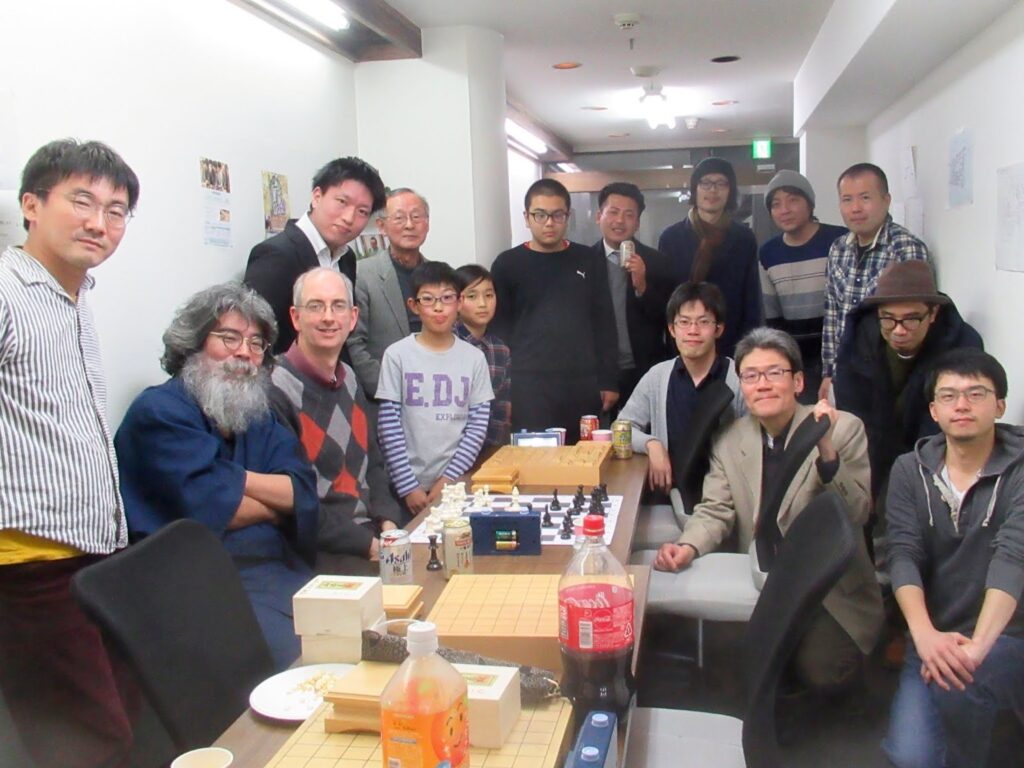
In addition to playing regularly at the local shogi club, I also had the opportunity to play shogi when I traveled to other places in Japan. This included playing at the National Shogi Headquarters in Tokyo, at the Shogi Center in downtown Hiroshima, and at a shogi-themed bar in Osaka. Through a contact at Kyoto University, I also got to meet one of the top professional shogi players, Tetsuro Itodani, a former holder of the prestigious Ryu-O title, and was able to play a handicap game with Itodani at the Kansai Shogi Headquarters in Osaka.
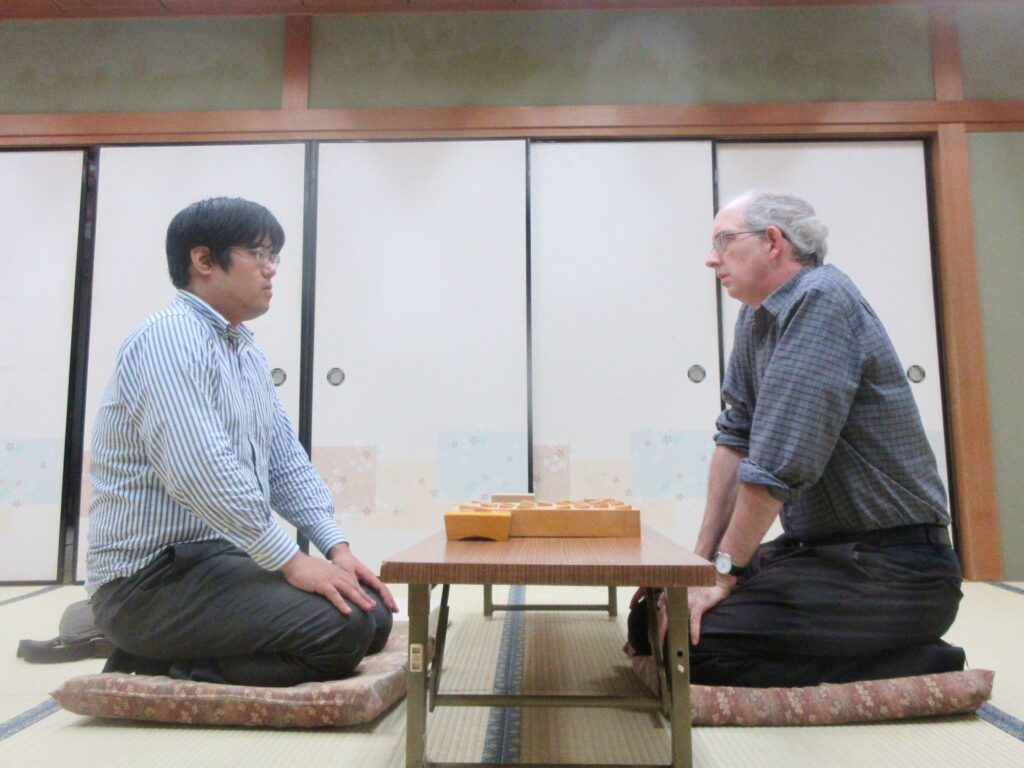
Towards the end of my time in Japan, my family and I visited the island of Ishigaki, towards the southern end of the archipelago of islands that makes up Okinawa Province. I had the opportunity to visit Ishigaki Shogi Club, which is the southernmost shogi club in the whole of Japan. During my afternoon at the shogi club, I had the honor of playing a game against the former amateur shogi champion of Okinawa.
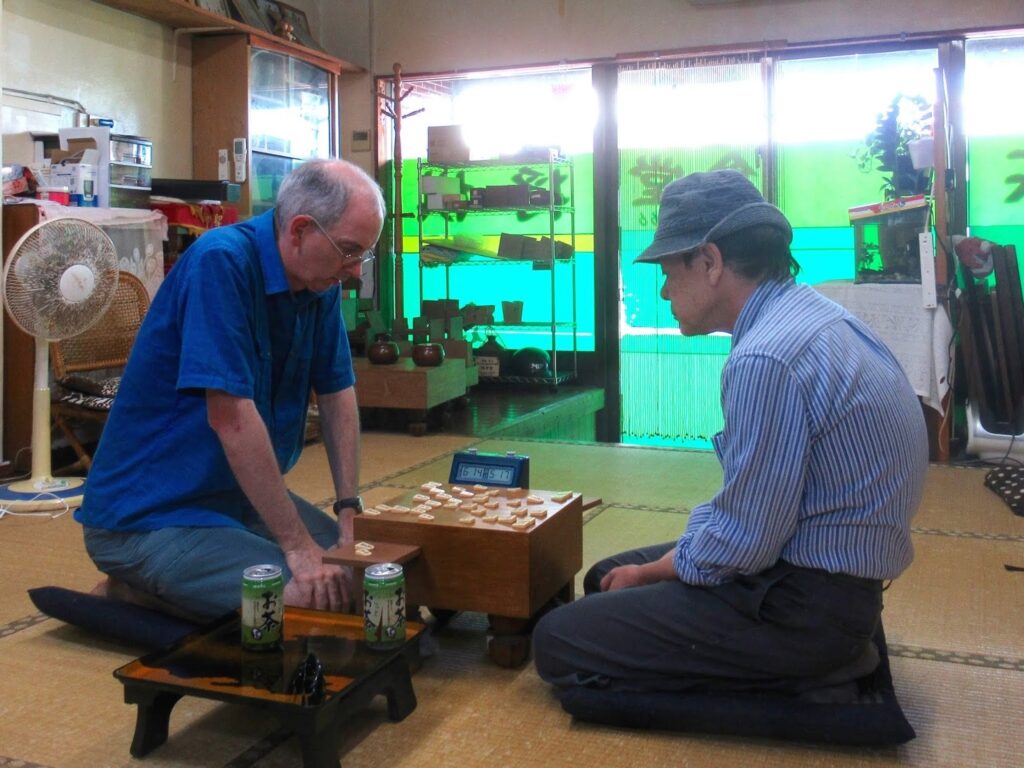
When I returned for a follow-up visit to Japan in summer 2023, I gave a philosophy lecture at Hokkaido University, and while in Hokkaido I traveled up to Wakkanai, in the far north of the island. I visited Wakkanai Shogi Club, which is the northernmost shogi club in Japan, thus completing a nice symmetry from the two geographic endpoints of the country!
In summary, I have found that shogi has provided a unique avenue for me into aspects of Japanese culture that I would not have otherwise been able to discover. Since I do not speak Japanese, it has also allowed me to communicate in another way through playing shogi with new friends. Finally, teaching shogi to students and community members back in America has been a way for me to contribute to spreading a traditional part of Japanese life beyond the borders of Japan.